

Around the finca: discovering the real heart of Mallorca
Finca Mia Limon is not by the sea – and that is exactly its charm. Around Algaida, some 20 kilometres east of Palma, the real Mallorca begins: gentle hills, almond and olive groves, quiet villages and a landscape where island life still follows its own rhythm. Stay here and you have the whole island on your doorstep – yet your evenings remain wonderfully peaceful.
The holy mountain on your doorstep: Puig de Randa
Just 15 to 20 minutes’ drive from the finca rises Puig de Randa (543 m) – after Lluc, the island’s most important place of pilgrimage. Three monasteries and hermitages cling to its slopes: the Santuari de Gràcia beneath a towering rock face, the Ermita de Sant Honorat halfway up, and at the very top the Santuari de Cura, whose origins trace back to the Mallorcan scholar Ramon Llull.
From the summit, the panorama stretches across half the island on a clear day. There is a traditional restaurant with sweeping views and a small museum shop up top (it’s best to check opening times in advance). The narrow, winding mountain road calls for a little patience – go early and the view is all yours. The height makes for a memorable sunset, too; just allow time for the tight drive back down.
Craft and tradition along the old country road
Right on the country road between Palma and Manacor, only minutes from the finca, lie two classics. At Gordiola (founded in 1718, Mallorca’s oldest glassworks) you can watch the glassblowers at their centuries-old craft and visit the little museum – a lovely tip for cooler or rainy days as well. A few hundred metres further on, the rustic Ca’l Dimoni has been grilling hearty Mallorcan fare since 1957, watched over by giant “devil” figures.
Markets, villages and wineries of the island’s interior
The island’s interior is market country. Algaida itself hosts a small, locals’ weekly market on the Plaça Major on Friday mornings. For the full experience, head to Sineu, about 20 minutes away, on a Wednesday – its market is considered the oldest and most traditional on the island. Also worth a visit are Petra, birthplace of Junípero Serra (founding father of California), and the neighbouring village of Montuïri.
All around lies genuine wine country, too: the Pla i Llevant and Binissalem appellations produce characterful wines from native grapes. Many bodegas – such as Macià Batle near Santa Maria or smaller family estates towards Manacor and Porreres – offer tours with tastings. It’s best to book ahead.
The Cossiers – Mallorca’s oldest dance
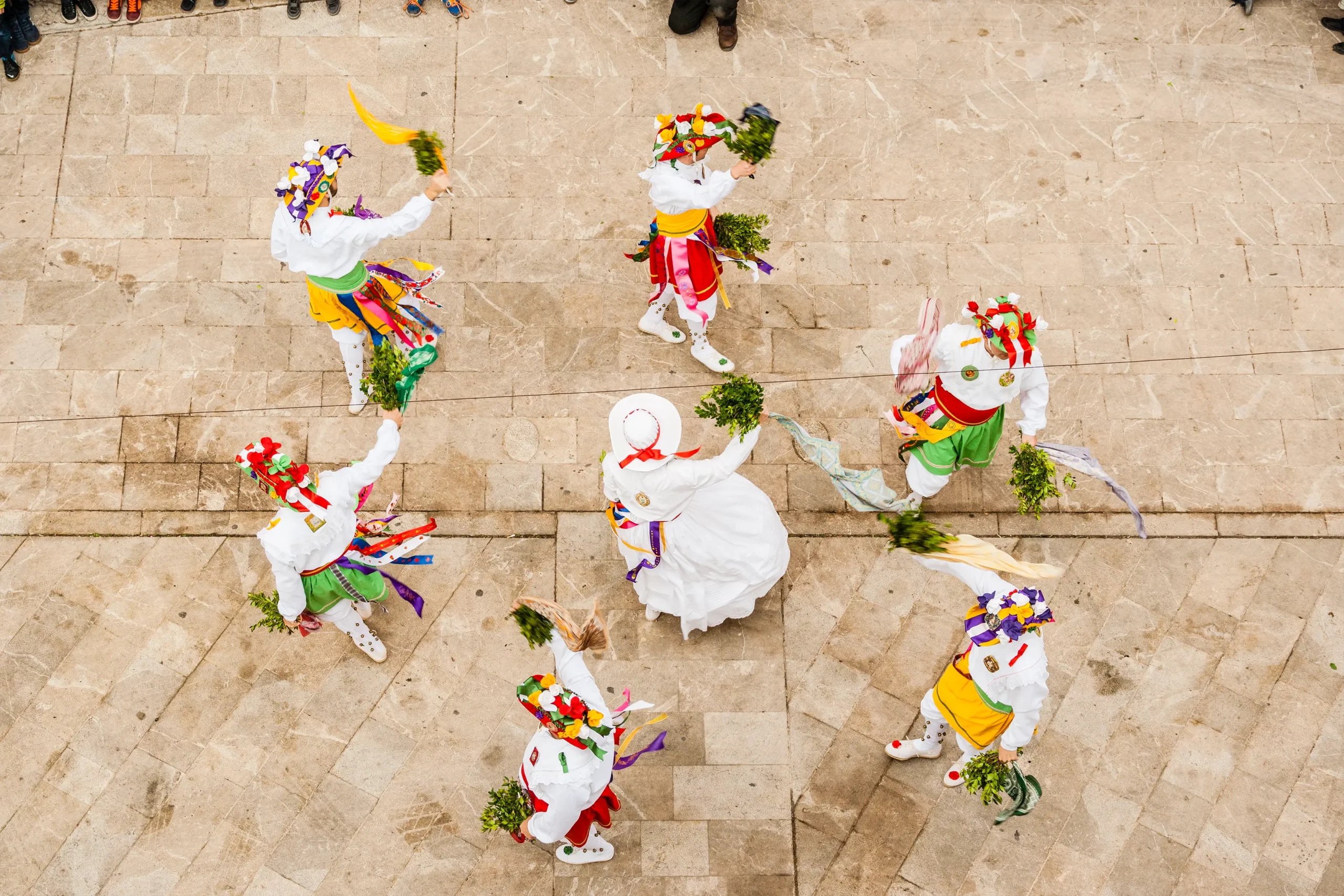
Algaida is one of the few places where the Cossiers have remained alive: a centuries-old ritual dance with six dancers, a “Dama” dressed in white and a mischievous “Dimoni” who lovingly disrupts the proceedings. Its great moment comes around the patron-saint festival of Sant Jaume in late July (expected around 25 July). Book the finca that week and you’ll see the village at its most beautiful and authentic.
And the sea? An honest word on the beaches
The finca lies inland – and the nearest beaches are on the south coast, not the east coast so often described. Realistically, from Algaida:
- Cala Pi (approx. 30 min) – a narrow, cliff-framed cove with fine sand.
- Es Trenc (approx. 35–40 min) – Mallorca’s longest natural beach, with Caribbean-turquoise water, within a nature reserve. Infrastructure here is deliberately minimal; expect a parking fee (around €7 per day) and sand rather than a promenade.
- S’Arenal de Sa Ràpita and Colònia de Sant Jordi (approx. 35–40 min) – quieter alternatives with the same water quality.
The famous little calas of the east coast – such as Caló des Moro or Cala d’Or – are not a neighbouring beach but a rewarding day trip (around 45–60 minutes’ drive).
That is precisely where Finca Mia Limon comes into its own: peaceful in the green interior, with culture, nature and good food right on the doorstep – and the sea still within easy reach.